After US Supreme Court Strikes Down Trump’s Tariff Powers, India’s Tariff Rate Lowered to 10%
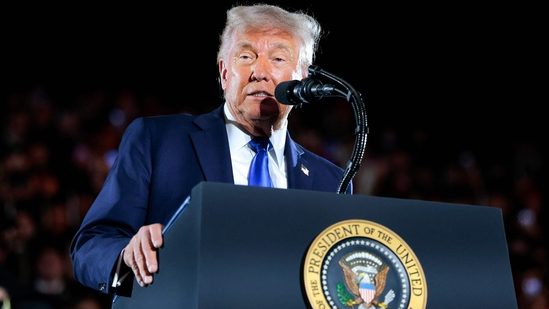
TUSCALOOSA, ALABAMA - MAY 01: U.S. President Donald Trump delivers remarks to graduating students at the Coleman Coliseum at the University of Alabama on May 01, 2025 in Tuscaloosa, Alabama. Trump's remarks come the day before commencement ceremonies. Anna Moneymaker/Getty Images/AFP (Photo by Anna Moneymaker / GETTY IMAGES NORTH AMERICA / Getty Images via AFP)
A major decision by the United States Supreme Court has upended a significant portion of former President Donald Trump’s global tariff policy, leading to a sharp reduction in tariffs on Indian imports into the United States.
Earlier this week, the Supreme Court ruled in a 6-3 decision that Trump had exceeded his legal authority by imposing sweeping tariffs on imported goods using emergency powers under the International Emergency Economic Powers Act (IEEPA). The justices concluded that this law — originally designed for national security emergencies — does not grant the President the power to enact broad global tariff levies in peacetime. This verdict delivers a rare judicial setback to Trump’s trade agenda.
In response to the ruling, President Trump moved quickly to sign an executive order under a separate legal authority — Section 122 of the Trade Act of 1974 — creating a temporary 10 per cent global tariff on imports entering the United States. This new duty is set to take effect from February 24 and will remain in place for up to 150 days unless further action is taken by Congress.
What This Means for India
India, like other US trading partners, will now face the 10 per cent tariff on its exports to the United States, replacing higher rates that had been in effect under earlier trade agreements or Trump’s previous tariff proclamations. The White House clarified that this new tariff applies regardless of previously negotiated or agreed-upon levels.
This tariff reduction represents a significant change from the earlier 18 per cent rate that New Delhi had been paying after interim trade arrangements announced between India and the United States. While the Supreme Court’s decision effectively invalidated the legal basis for many of Trump’s prior tariff measures, the new levy ensures that a trade barrier remains in place.
Trump has emphasized that his trade relationship with India remains strong, calling the India-US trade deal “on” and insisting that the new tariff regime will not derail ongoing economic cooperation.
Broader Impact and Next Steps
The Supreme Court’s ruling is being viewed as a significant constitutional check on presidential authority over trade policy. It also raises complex questions about whether businesses and countries could seek refunds for billions of dollars collected under the now-invalidated tariff regime — a process likely to be decided in lower courts over months or years.
Economists and market analysts have commented that while the new 10 per cent tariff reduces the immediate burden on exporters, uncertainty persists as the administration explores alternate legal tools to maintain tariff revenues and extend trade controls.
Overall, the Supreme Court’s decision reshapes the US tariff landscape, affects global trade dynamics, and alters how partner nations such as India will navigate their export strategies in the months ahead.